
 Age: 1 year
 Plants 1 new Olive tree
 CO2 absorbed: 150 kg/year
 Evo oil included:




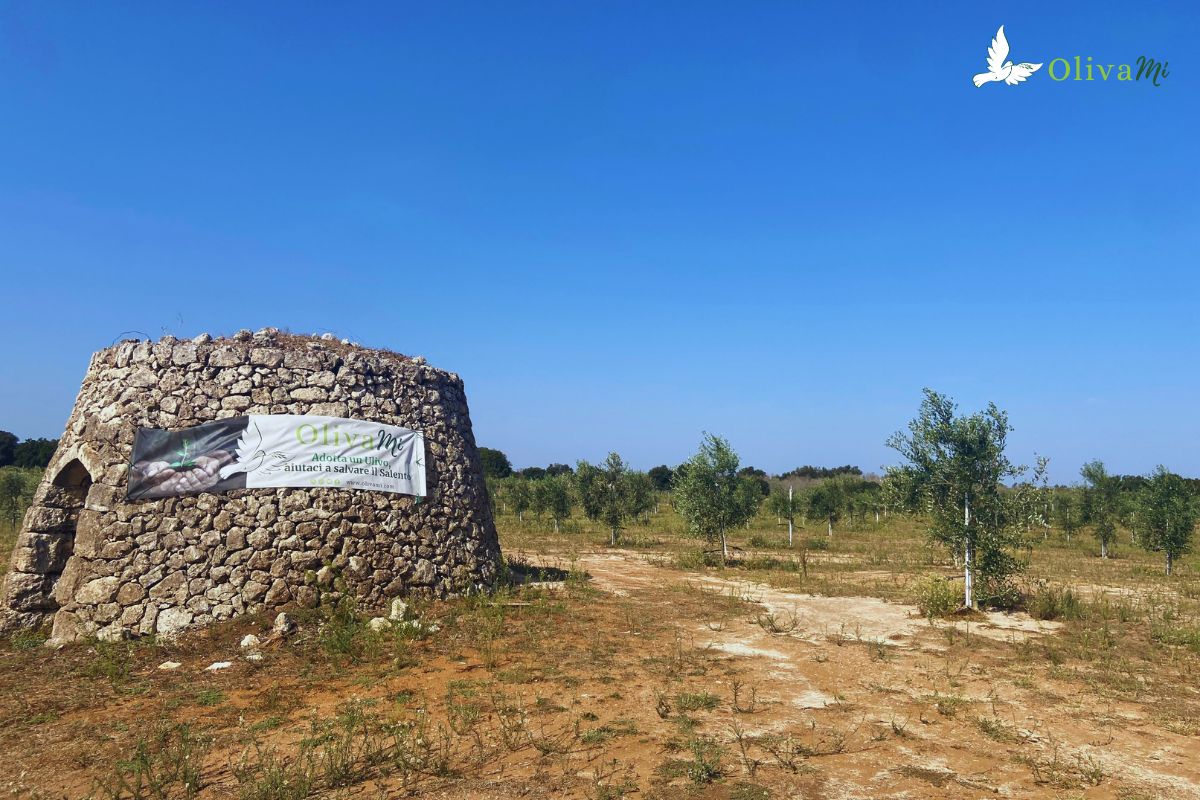
Introduction – Le Pajare
Hidden among the olive trees and dry-stone walls of Salento, the pajare are a fascinating and ancient symbol of Salento’s culture.
These rural buildings, which dot the landscape with their unmistakable and unique architecture, are much more than mere shelters. They are true testaments to a (not-too-distant) past, to a farming life marked by sacrifice, ingenuity, and harmony with nature.

Origins and History of the Pajare
The pajare, also known as “pagghiare” or “furnieddhi” in the Salento dialect, likely date back to the Byzantine era.
Some scholars date the first pajare to around the year 1000 A.D., during the Byzantine era, while others trace them back as far as 2000 B.C., during the Bronze Age.
These structures, similar to the better-known trulli of the Itria Valley, were used by farmers as temporary shelters for short summer breaks or throughout the entire period of work in the fields.
Their construction, done entirely with dry stone, did not require the use of mortar or other binding agents, but relied on the skillful arrangement of the stones to create a stable and durable structure.
Architecture and Function
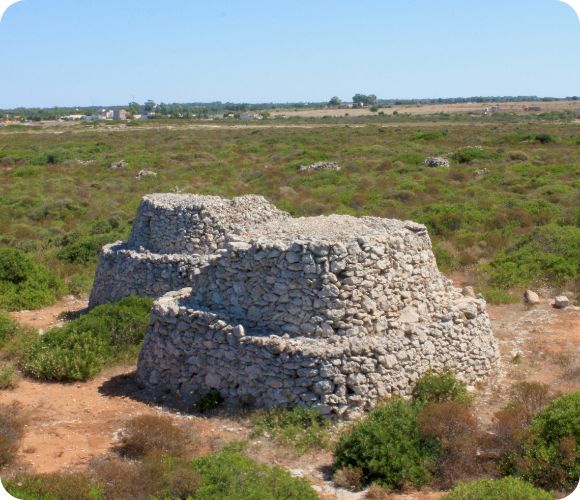
Pajare are characterized by a circular or square floor plan and thick walls made entirely of stone, which help keep the interior cool during the hot summer months and provide safe shelter in case of rain.
The more recently built ones also feature spiral staircases that run along the entire circumference of the pajara and lead up to the roof; this allowed the farmers to survey the entire surrounding field from above.
In fact, most of the pajare were built and located in the center of the lot.
Although ancient, the structures had been designed to withstand the test of time and the elements, making them virtually indestructible.
In addition to serving as shelters, pajares were often used to store farm tools, as storage for crops and straw, or as stables for animals.
Their name, “pajare,” comes from the Salento dialect word “paja,” which means “straw”; in fact, they were originally used as storage sheds for straw.


Symbiosis with the Landscape
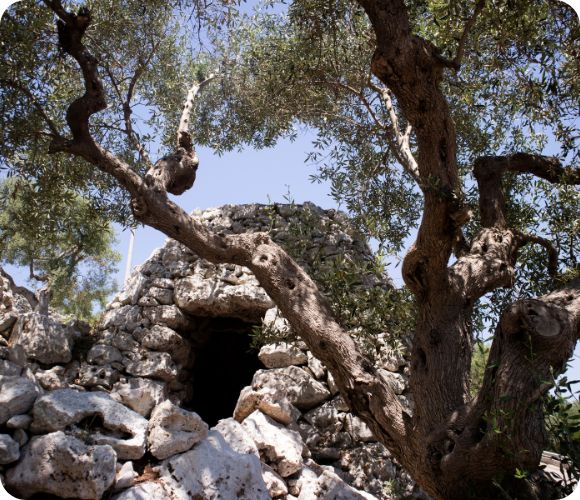
One of the most fascinating aspects of the pajare is how perfectly they blend into the Salento landscape. These structures seem to emerge almost spontaneously from the earth, as if they had been created by nature itself. In fact, farmers used the stones they gathered while clearing their fields to build pajare, thereby helping to shape the landscape in a sustainable and harmonious way.
Today, a Heritage Worth Celebrating
In recent years, pajare have been the subject of renewed interest. Many landowners and enthusiasts of rural architecture have begun restoring and revitalizing them, recognizing their historical and cultural value. Some pajare have been transformed into charming vacation homes, offering visitors the opportunity to enjoy an authentic experience and immerse themselves in the beauty of Salento.

The pajare of Salento represent a unique and precious heritage, a symbol of a millennia-old tradition that deserves to be known and preserved. Every stone and every curve of these structures tells a story of hard work, ingenuity, and love for the land. Visiting Salento also means rediscovering these architectural wonders, letting yourself be captivated by their simplicity and their extraordinary ability to recount a past that still lives on today among the olive trees and dry-stone walls.
If you’re planning a visit to Salento (discover all the benefits at participating properties that are part of the OlivaMi Club), don’t miss the chance to explore the pajare and let yourself be captivated by their timeless charm. And remember, behind every pajara lies a story, waiting to be discovered and told.
Some of our olive groves feature these wonderful structures. Find out where our olive groves are located by visiting the“Visit Your Olive Tree”page or by joining our initiative: adopt a young olive tree and help revitalize our region.