
 Age: 1 year
 Plants 1 new Olive tree
 CO2 absorbed: 150 kg/year
 Evo oil included:





Introduction – Benefits of Italian Carbon Credits
Turning one’s emissions into an opportunity for growth is the true strategic value of carbon credits.
For companies that want to stand out, offsettingtheir environmental impact is not just an act of responsibility, but an investment that strengthens their reputation, reinforces ESG standards, and paves the way for new incentives and business opportunities.
There are, therefore, real benefits to purchasing carbon credits in Italy that a company can enjoy by investing in Italian carbon credits—not only in terms of corporate image, but also in terms of tax and regulatory advantages.
Branding and Reputation: Sustainability as a Competitive Advantage
Consumers and stakeholders are increasingly rewarding companies that demonstrate a genuine and meaningful commitment to carbon neutrality. Integrating the Olivami’sItalian carbon credits , generated through the planting and care of olive trees, make it possible to:
- Describing a local and transparent project—one that is rooted in Italy and therefore more tangible and relatable than generic projects abroad.
- Strengthen brand equityby positioningthe company as committed to climate protection, the national landscape, and Mediterranean biodiversity.
- To stand out in the market by conveying values of social and environmental responsibility to customers, partners, and institutions.


Alignment with ESG Standards
For investors, financial partners, and markets,compliance with ESG (Environmental, Social, Governance)standards is becoming increasingly critical. Purchasing verified carbon credits helps to:
- Improve the corporate ESG score , supporting sustainability reporting (CSRD, GRI, SASB, etc.).
- Demonstrate concrete actions in support of the Net Zero.
- Effectively respond to requests for transparency from stakeholders, regulators, and B2B customers.
With Olivami credits, companies can document the offsetting of their emissions with verifiable data, incorporating a real and measurable impact into their sustainability reports or ESG reports.
Tax Incentives and Regulatory Framework (in Italy)
Although there is not yet a direct tax deduction forthe purchase of voluntary carbon credits, Italian companies can:
- Highlight these initiatives in public calls for proposals and competitive bidding processes, where environmental sustainability is increasingly a key selection criterion.
- Demonstrate a concrete commitment in line with the National Recovery and Resilience Plan (PNRR) and the government’s decarbonization strategies —a factor that can positively influence access to public or European funding.
- Improve your competitive position in the procurement processes of large companies and multinationals, which are increasingly focused on selecting sustainable suppliers.
Impacts on Corporate Image and Culture
Offsetting emissions through local projects like those of Olivami isn’t just a technical decision—it becomes a meaningful story that engages employees, customers, and the community.
Internally, it fosters the corporate culture, strengthening the team’s sense of belonging and motivation.
Externally, it fosters engagement and communication opportunities through a project that combines climate protection with the preservation of Italy’s cultural heritage.
Conclusion – The Benefits of Purchasing Italian Carbon Credits
For a company aiming to play a leading role in the ecological transition, purchasing Olivami’s certified Italian carbon credits means much more than simply offsetting its emissions: it is a choice that builds reputational value, strengthens its ESG positioning, opens up market opportunities, and contributes to the tangible protection of the local environment.
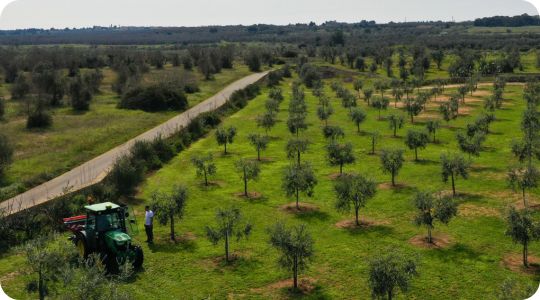
Our 100% Italian Carbon Credits, verified ex-post by Climate Standard and generated using a protocol validated by RINA in accordance with ISO 14064-2, offer businesses the assurance of a measurable and recognized impact. Each credit not only offsets CO₂, but also contributes to the reconstruction of Salento—a region severely affected by Xylella—restoring life to landscapes, communities, and biodiversity.
In a landscape where sustainability is increasingly linked to competitiveness, carbon credits are not a cost—they are a strategic investment in the future of the company and the planet.