
 Age: 1 year
 Plants 1 new Olive tree
 CO2 absorbed: 150 kg/year
 Evo oil included:







Introduction – Carbon Neutral: What It Means and How to Achieve Carbon Neutrality
In recent years, the concept of carbon neutral has become part of everyday sustainability vocabulary, but it is often unclear what it really means and what implications it has for businesses.
Understanding carbon neutrality is a fundamental first step for anyone who wants to embark on a solid and credible path toward environmental responsibility.
Carbon Neutral: Meaning and Definition
With carbon neutrality refers to the condition in which carbon dioxide (CO₂) emissions generated by an activity, a process, or an organization are reduced and offset to the point where their net impact on the atmosphere is zero.
To be carbon neutral (or “climate neutral”) means that the greenhouse gas emissions generated by an activity, a product, or a process are measured, reduced as much as possible through efficiency measures, innovation, and renewable energy sources, and offset through the purchase of certified carbon credits, which finance projects capable of absorbing or reducing CO₂.
In other words, “carbon neutral” does not mean “zero emissions,” but rather finding a balance: reducing emissions as much as possible and offsetting the remaining emissions through certified offset programs, such as reforestation projects or carbon farming initiatives.


Why It Is Necessary to Offset Carbon Dioxide (CO2) Emissions
Reducing emissions is essential, but it is not always enough. Certain economic and industrial activities, by their very nature, will continue to generate an unavoidable amount of CO₂. That is why carbon offsetting plays a central role.
To address this challenge, the2015 Paris Agreement It has determined that the international community must take urgent action to limit the rise in global temperature to 1.5 °C. This means that not only governments, but also businesses, must gradually reduce their emissions and offset any remaining ones.
Offsetting does not replace reduction, but rather complements it: it is the tool that makes it possible to neutralize unavoidable emissions, making sustainability efforts more effective and measurable.
What does it mean for a company to become carbon neutral?
To be carbon neutral for a company means measuring and disclosing its carbon footprint, gradually reducing its sources of emissions, and offsetting the remaining emissions through certified projects.
This is not just a label, but a structured process that involves:
- Carbon footprint measurement (Scopes 1, 2, and 3),
- defining reduction strategies consistent with its activities,
- offsetting residual emissions with carbon credits verified by third-party organizations.
Why Carbon Neutrality Is Important for a Company
Understanding what “carbon neutral” means is essential for companies and brings benefits on multiple levels; first and foremost, the company demonstrates a concrete commitment to combating climate change ( environmental level). This focus enhances the company’s credibility with customers, partners, and stakeholders, while avoiding the risk of greenwashing ( reputational level).
Furthermore, it creates competitive value by differentiating the company’s market offering (strategic level) and, at the same time, supports ESG objectives—which are increasingly sought after by investors and consumers who are mindful of sustainable practices—and drives internal efficiency (organizational level).
In short, carbon neutrality is not only an environmental responsibility but also a driver of competitiveness and innovation.
How to Become Carbon Neutral
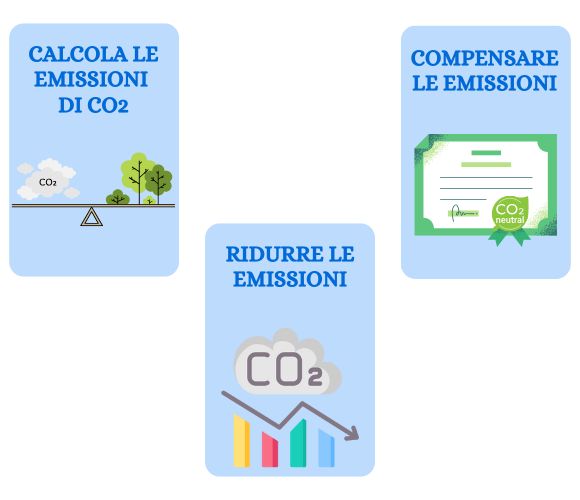
The path toward climate neutrality consists of three main phases:
- Calculate the carbon footprint – Collect and analyze data on energy consumption, transportation, materials, and all activities that generate emissions.
- Reduce emissions – define concrete actions to progressively reduce CO₂ emissions (energy efficiency, sustainable mobility, responsible procurement).
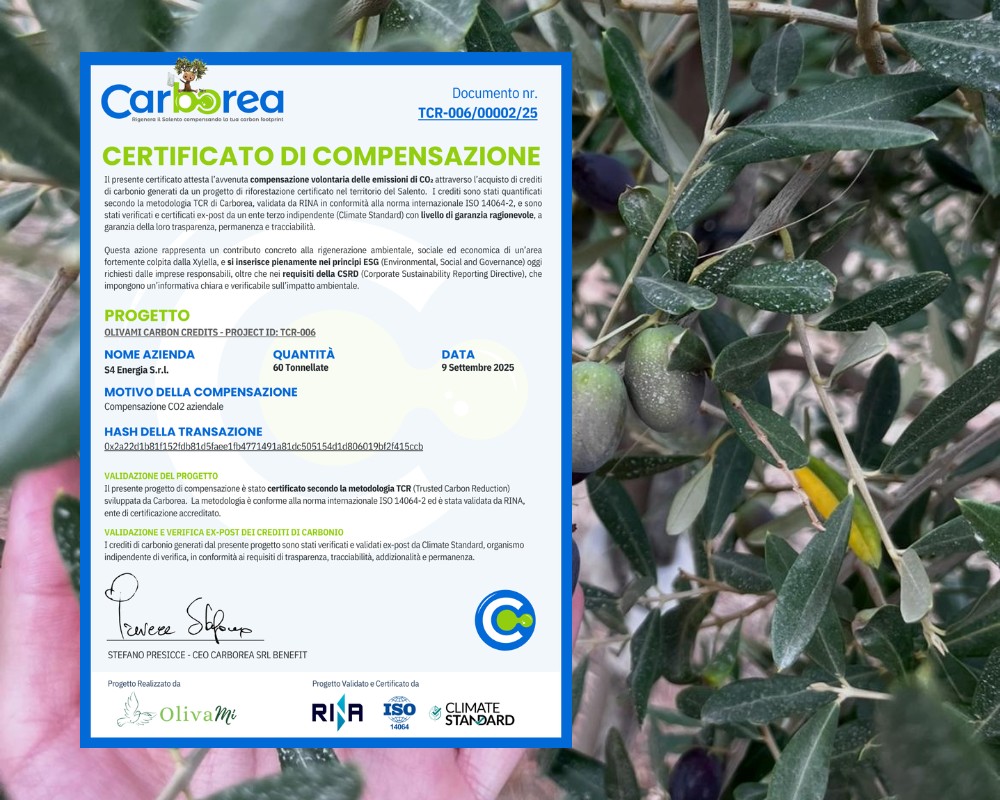
- Offset residual emissions – purchase certified carbon credits that ensure transparency, traceability, and real impact.
These three steps form the core of a rigorous, internationally recognized approach.