
 Age: 1 year
 Plants 1 new Olive tree
 CO2 absorbed: 150 kg/year
 Evo oil included:





INTRODUCTION – The Stages of Olive Oil Production
The stages of olive oil production: Do you know them inside and out?
Extra Virgin Olive Oil is much more than just a condiment: it is the result of a long and delicate process that requires experience, care, and respect for the raw material.
In fact, every stage of production has a crucial impact on the quality of the final product, and at OlivaMi, we work with dedication to ensure that every bottle embodies the excellence of our olives.
Let’s explore together the five main stages of extra virgin olive oil production and why each one is essential.
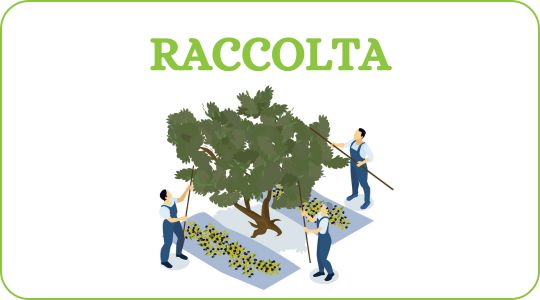


1. The Olive Harvest
Olive harvesting is the first and one of the most important steps in the production of high-quality olive oil. The olives must be harvested when they have reached the right level of ripeness.
This phase usually takes place between October and December, and depends heavily on weather conditions, such as rain and temperature.
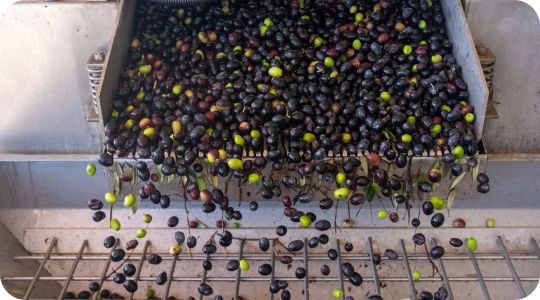
2. Cleaning and Defoliation
Once harvested, the olives must be cleaned to remove leaves, twigs, and debris.
This step is essential to prevent residues from adversely affecting the flavor and quality of the oil.
The process of removing the leaves and washing the olives ensures that only healthy, clean olives proceed to processing, thereby preserving the oil’s organoleptic characteristics.
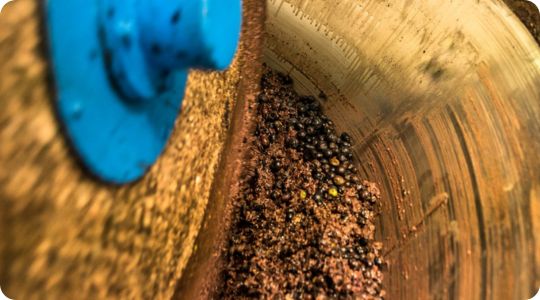
3. The Pressing Process
Pressing is the process by which the cleaned olives are turned into a paste.
At this stage, the olives are crushed along with their pits to break down the cell walls and release the oil contained within them.
We use mechanical presses that keep temperatures low, preventing the product from oxidizing. Cold pressing is essential for producing high-quality extra virgin olive oil, preserving its aromas and health benefits.
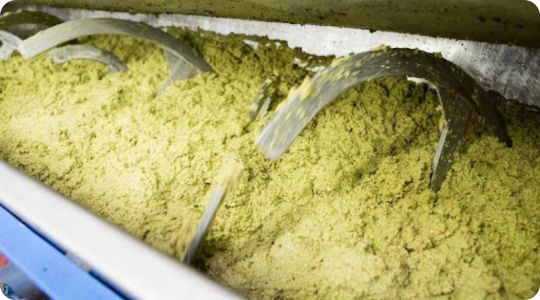
4. Kneading
The paste obtained from the pressing is then subjected to kneading, a process of slow mixing. During this phase, the micro-droplets of oil present in the paste begin to coalesce through continuous mixing until they form larger droplets, ready to be extracted.
The temperature during this phase is crucial: it must be maintained between 20 and 27°C for no more than 60 minutes.Theso-called“cold extraction”helps preserve the oil’s nutritional properties and authentic flavors. This is the heart of the process, where the final quality of the product is determined.
5. Extraction and Filtration – The Final Stages of Oil Production
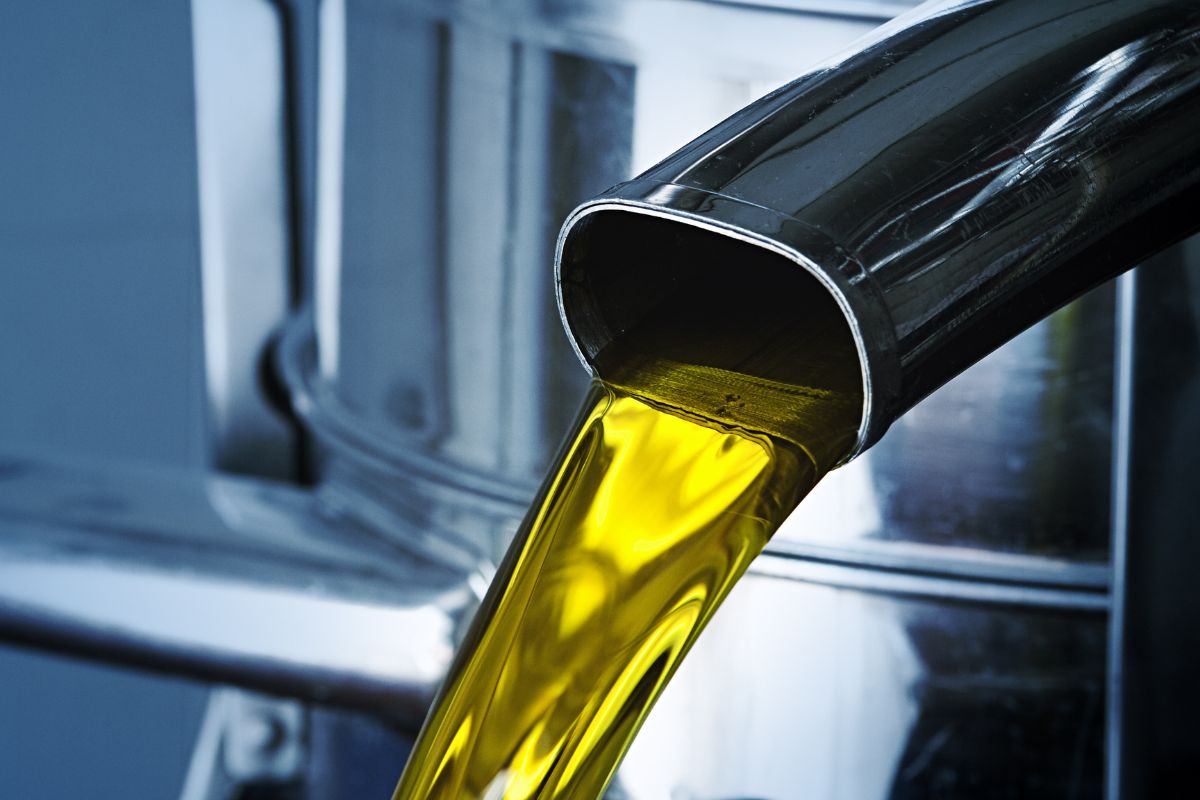
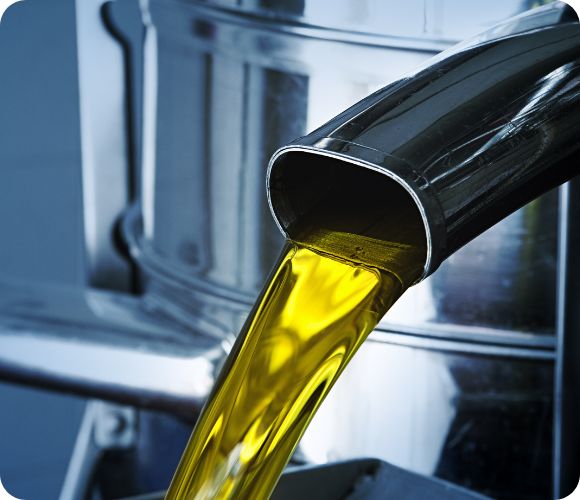
After kneading, the oil is separated from the solid part of the paste (pomace) and the vegetable water. This takes place inside a centrifuge called a decanter. Proper separation is essential to ensure that the oil is pure and free of impurities.
Even at this stage, the temperature and processing times are carefully monitored to prevent oxidation, which would compromise the freshness of the product.
Finally, the oil is filtered to ensure its purity, and now it’s ready to be enjoyed!
From harvest to your table
Every stage of the production of extra virgin olive oil requires great precision and care. From harvesting to filtering, each step is designed to bring out the unique characteristics of our olives.
Understanding this process helps us appreciate the value of every drop of Salento extra virgin olive oil that we bring to our tables.
Click here to read our blog post on the different types of olive oil.