
 Age: 1 year
 Plants 1 new Olive tree
 CO2 absorbed: 150 kg/year
 Evo oil included:




Introduction – The Baroque in Lecce
In the heart of Salento, where olive trees embrace the red earth and the wind carries the scent of the sea, there is a city where stone seems to dance. Lecce is not just a city: it is a caress carved in time, a stone garden that suddenly blossomed in the midst of the 17th century. Its Baroque style is different, unique. Not opulent: generous. Not ostentatious: luminous.


A Baroque Style Born of the Region: Pietra Leccese
The magic of Lecce’s Baroque style stems from a gift of the earth: Lecce stone (click here to read our article on Lecce stone and learn more about this distinctive material).
So soft to carve, honey-colored in the sun, porous like memory. The local stonemasons—true poets of the hammer and chisel— transformed it into stone lace, flowers, scrolls, cherubs, and fantastical creatures. Nothing else was needed: beauty was all there, in a block of limestone and in the artistry of their hands.
A Brief History of the Lecce Baroque
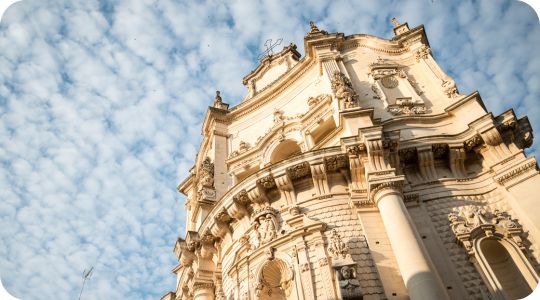
The Lecce Baroque emerged between the late 16th century and the 18th century, during a period of cultural and religious renewal. It wasthe creative spirit of Salento that transformed it into something unique: Spanish and Roman influences blended with the light of the South and the malleability of Lecce stone, giving rise to a style that is rich yet never heavy, profound yet always grounded. It was not merely an art of facades: it was a language of identity, created to express faith, community, and the everyday beauty of a region that has never ceased to shape its own history.
A beauty that grows like olive trees
Like a centuries-old olive tree, the Lecce Baroque style does not develop quickly. It grows in layers: of faith, art, and identity. It is the style of the churches that overlook the white, silent squares, of the balconies that tell stories of love and the sea, and of the portals that seem like invitations to dream.
And like everything in the South, it is the result of a deep symbiosis with nature: the light of Salento—sharp and golden—caresses every contour and transforms it into a living, shifting embroidery that changes throughout the day.


The landmark of Lecce Baroque: the Basilica of Santa Croce
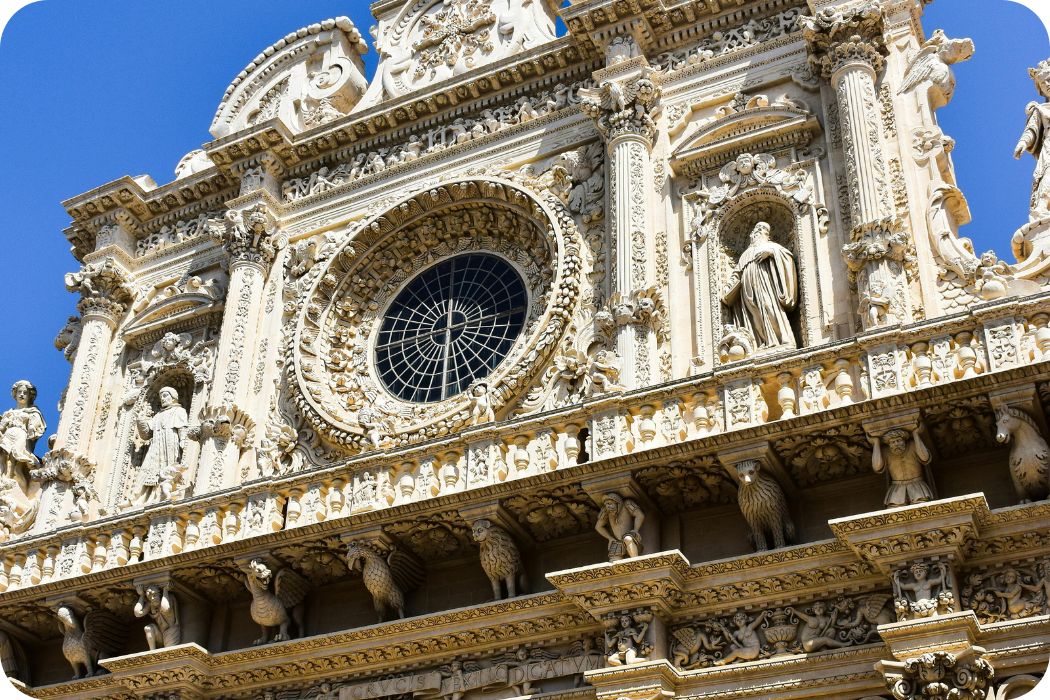
In the heart of Lecce stands a monument that epitomizes Lecce Baroque and is known throughout the world: the Basilica of Santa Croce, an absolute masterpiece—a symphony carved in stone that never fails to take everyone’s breath away.
Here, art becomes nature: flowers, bunches of grapes, fantastical animals, and allegorical figures intertwine in a perfect balance between the sacred and the wondrous. Its façade is a story that never ceases to speak, carved with patience and passion by generations of artisans who have transformed stone into poetry.
The Basilica of Santa Croce is a symbol of a Lecce that has never been afraid to be generous with its beauty, just like an olive tree.
Olivami and the Baroque: A Common Language
Here at Olivami, we, too, speak the language of our roots. While the Baroque style carves stone to tell the story of Salento, we plant new olive trees to restore the Salento landscape, building a bridge between what has been and what will be. We both tell the story of this land through concrete actions that exude love and resilience.
Adopting an olive tree with Olivami is a bit like adopting a small part of Salento: it’s an act of love toward a land that has so much to say—and that needs to be heard, cared for, and given a future.