
 Age: 1 year
 Plants 1 new Olive tree
 CO2 absorbed: 150 kg/year
 Evo oil included:





Introduction – Women and the Olive Harvest
Salento, a land kissed by the sun and caressed by the wind, has for centuries been home to olive groves stretching as far as the eye can see. Unfortunately, however, over the past decade or so, its famous green landscape has been transformed into an endless desert of skeletal trunks, dried up and dead due to Xylella.
In recent years, farmers have resumed planting olive varieties that are tolerant and resistant to the bacterium, reviving the Salento traditions passed down from their grandparents and parents.
Here, the olive harvest is not just an agricultural practice, but a true ritual rooted in tradition and passed down from generation to generation.
In the past, this time of year was experienced with great intensity, involving entire communities, and women played a central role, both in working the fields and in preserving traditions.
Let’s find out right away what role women played during the olive harvest!


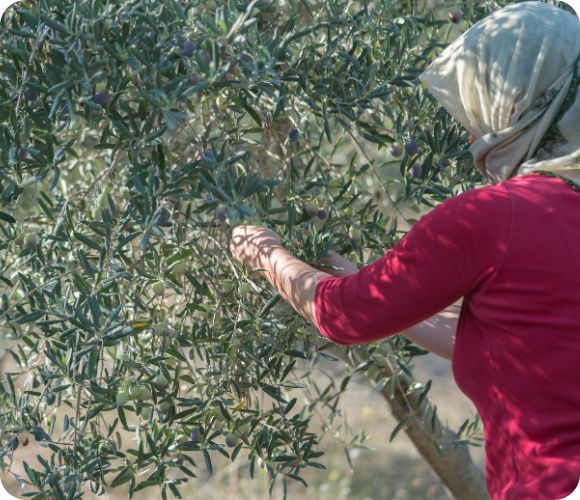


The Ancient Tradition of Olive Harvesting in Salento
In the past, the olive harvest in Salento was done by hand and required a great deal of collective effort.
Men, women, and children would gather in the fields at the crack of dawn, ready to spend entire days working among the olive trees until sunset.
Women, in particular, were essential to the success of the harvest.

The folk songs in the collection
With their skilled and tireless hands, the women picked the olives one by one and placed them in“panari”(baskets). Often, to keep from getting bored and to make the hard work seem easier, the women sang short verses of folk songs.
The women’s voices were frequently interrupted by the men’s, who responded by singing in turn.
They were actual sung speeches that set the pace of the work and created an atmosphere of togetherness and fun (especially for the little ones who watched these performances).
The songs explained how the harvest took place and described the hard work and toil of farm life.
These songs sung by the peasants of Salento were also known as“canto alla stisa”(accompanied by musical instruments) or“canto a pura uce”(sung in unison).
The Role of Women in the Olive Harvest
The women’s task was not only to harvest the olives, but also to carefully select the best ones, discarding those that were damaged or overripe.
The women were therefore responsible for managing the harvested produce, while the men transported the olives to the mills or storage areas, where they were prepared for pressing.
But women’s contributions went beyond physical labor. In fact, it was they who safeguarded the secrets of tradition, passing down from mother to daughter the best techniques for producing superior-quality olive oil. Their expert hands could recognize when the olives had reached perfect ripeness—a skill that ensured the production of an olive oil that still today represents the heart of Salento’s culture.


A Bridge Between the Past and the Future
Even today, the olive harvest is a time that brings the family together and celebrates the bounty of the Salento region.
While in the past women’s labor was the beating heart of this tradition, today certain modern harvesting techniques have made the work easier, allowing us to honor that heritage while preserving the quality and authenticity of our oil.
Progress has not erased tradition, but has enriched it, allowing us to continue producing an oil that tells a story of passion, respect, and love for our land.
With OlivaMi, we strive to revive our traditions, pass them on to the younger generation, and resume production of Salento’s renowned extra virgin olive oil.
Adopt one or more olive trees and receive the Salento extra virgin olive oil they produce.