
 Age: 1 year
 Plants 1 new Olive tree
 CO2 absorbed: 150 kg/year
 Evo oil included:




Introduction - Carbon Credits
We often hear about“carbon credits,” but what exactly are they?
We are certainly talking about sustainability and environmental impact.
This is a useful tool for companies across all sectors to implement sustainability initiatives and help mitigate climate change
But what exactly are carbon credits? Let’s find out right away.
Carbon Credits: What Are They?
Carbon credits are a unit of measurement used to quantify the offsetting of greenhouse gas emissions, including carbon dioxide (CO2), from the atmosphere.
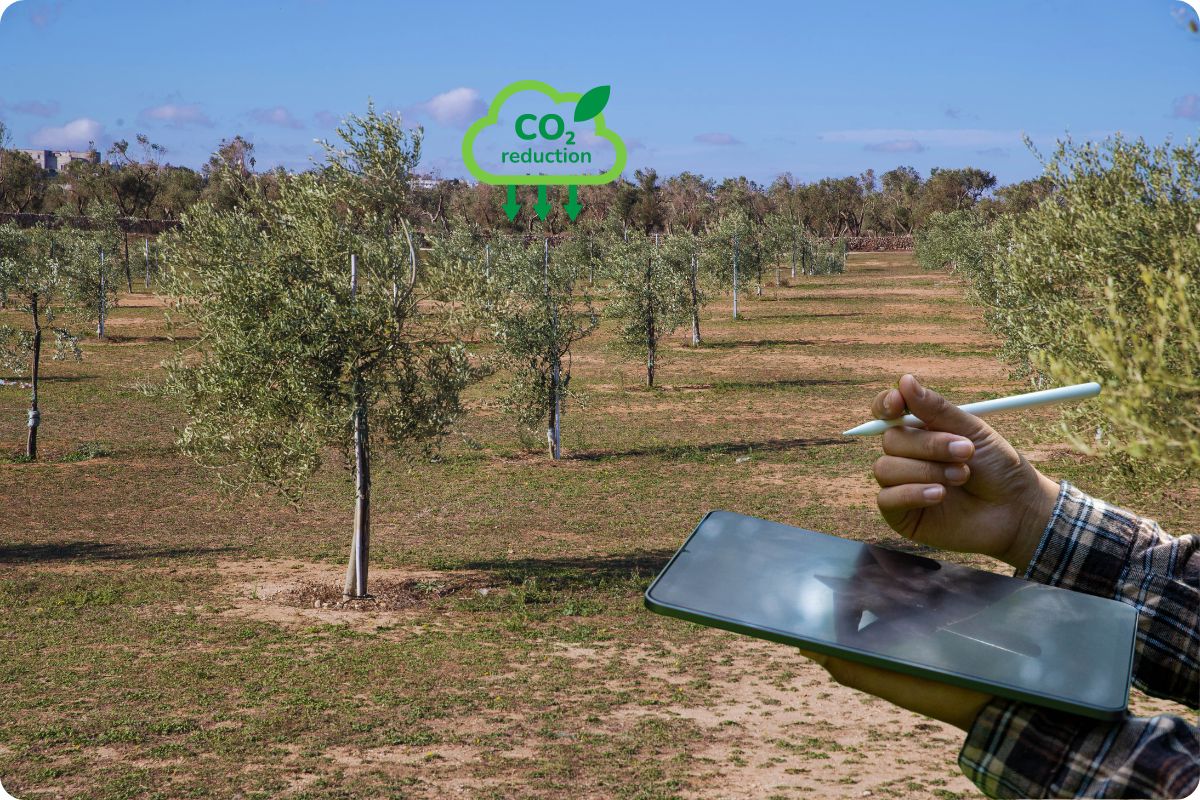
They represent the reduction of one ton of CO2 (or other greenhouse gases) equivalent achieved through projects that reduce emissions from the atmosphere or through reforestation ( click here to find out how much CO2 an olive tree absorbs in a year).
The idea behind carbon credits is to create a system that allows greenhouse gas emitters to offset their emissions by funding sustainable projects that reduce or fully offset their environmental impact.


Benefits of Carbon Credits

Issues with Carbon Credits
As always, there are pros and cons. Carbon credits also have certain drawbacks and disadvantages that need to be taken into account.
Certified (and registered) environmental impact
Carbon credits have become a tool that allows companies to offset their emissions and promote the transition to a low-carbon or carbon-neutral economy. Certified carbon credits can be included in a company’s sustainability report or ESG reports.
Our carbon credits are not only Italian and certified, but they are also recorded on the blockchain to ensure maximum authenticity, immutability, and transparency.
Learn all about our carbon credits.